Media & Shows
How a look and a hobby traveled: by paper, plastic and show hall.
How did a Barris chop in Lynwood become a look copied in Akron, Wichita and Portland? And how did street rodding get its own magazine? Through paper, plastic and show halls. This department follows each channel: the magazines and books that covered hot rodding, the model kits that sold it to kids, and the indoor shows that gave it a stage. The cars and builders themselves live in other departments (see Customs & Kustom Kulture and Street Rodding).
Short on time? The Quick Answers give the short version of the big questions about media and shows, each with a link to the full story.
13 stories in Media & Shows
- Customs on Paper and in Plastic Petersen's 1951 Custom Cars Trend Book drew a line between a restyled car and a custom. AMT's 3-in-1 kits followed in 1958, and Roth's Outlaw was a Revell kit in 1962. Read the full story Medium
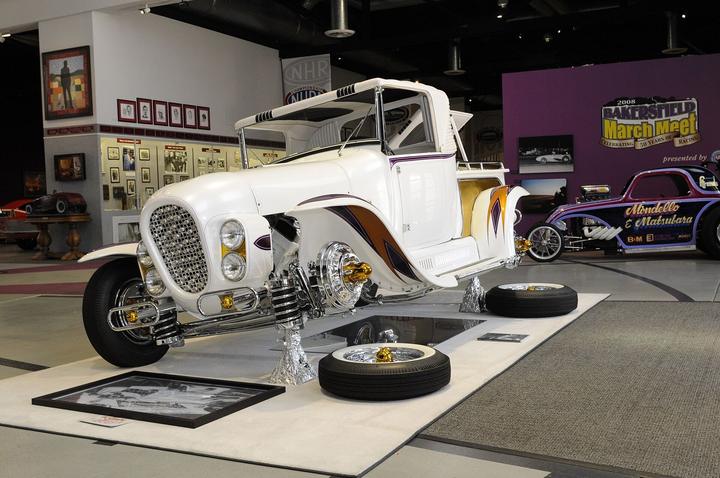
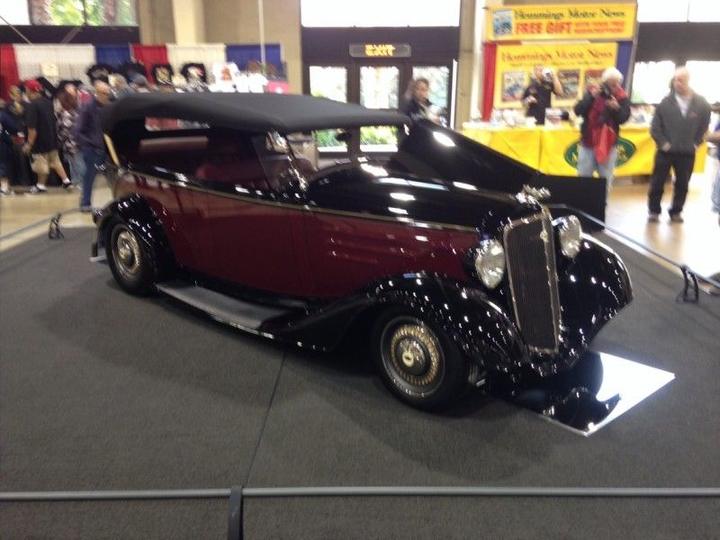
- Rope Barriers, Water Drums and the Show Circuit The first National Roadster Show, Jan 19–22, 1950, had rope barriers on water drums and about 100 cars. Detroit's first Autorama, in 1953, had 45–50 vehicles, and Portland's show has been produced by volunteers since 1956. Read the full story Medium
- Street Rod Before Street Rodder Before Street Rodder there was Street Rod, a 64-page, 75-cent monthly made in Portland apartments. It ran 20 issues, from October 1971 to July 1973, and then the cash flow and the paper shortage ended it. Read the full story Medium
- Street Rod in the Small-Town Paper: Henry Gregor Felsen’s Serial (1953–1954) In 1954 small-town papers ran Henry Gregor Felsen's novel Street Rod as a daily serial, so a kid in Hope, Arkansas, could follow a hot rodder's fight with city hall. The towns were having that same argument. Read the full story MediumGrassroots
- A Dance That Grew Cars: How Hot August Nights Started in Reno (1986) Hot August Nights began in 1986 as a Reno realtors' '50s dance for Easter Seals, with a Classic Chevys show and shine added and a softball tournament's out-of-town trick borrowed; its own history calls year one "more of a nostalgia event than a car event." Who named it, and why, is told three ways. Read the full story MediumGrassroots
- Where Lucas Shot It: Petaluma, American Graffiti and the Town’s Own Car Show (1946–2023) When San Rafael pulled its permission after one night in June 1972, George Lucas moved American Graffiti to Petaluma, a town with its own drive-in and car-club scene. Thirty-three years later, local car people founded Cruisin' the Boulevard and turned the film into a downtown car show that raises money for the town. Read the full story MediumGrassroots
- Home of The California Kid: A TV Movie Coupe, Pete & Jake’s and the Road to Peculiar, Missouri (1972–2025) Pete Chapouris built a chopped '34 Ford coupe in his Temple City backyard garage, a magazine cover put it in a 1974 TV movie, and Universal let his new parts shop call itself "Home of The California Kid." A Kansas City dealer who called that shop for parts bought it in 1986 or 1987, and the car still sits in Peculiar, Missouri. Read the full story MediumGrassroots
- Why Limit It Just to Swaps? Holley’s LS Fest at Beech Bend (Bowling Green, Kentucky, 2010–2024) A carburetor company held its first LS Fest at its hometown track in 2010, for an engine hot rodders had been pulling out of junkyard trucks, and about 150 cars came. The engine swap itself became a race, and by 2019 the crowd had grown big enough that the county widened the road. Read the full story MediumGrassroots
- Two Nationals in One Summer: The Vanners, the National Truck-In and Beech Bend (Bowling Green, Kentucky, 1973–2017) A Hot Rod editor's call for a national van meet grew into the National Truck-In, and the third one, at Beech Bend Park in Bowling Green in 1975, drew more than 4,500 vans. When the NSVA booked Beech Bend again, Denver's Rocky Mountain Vans won the name, so 1976 had two Nationals and the clubs kept the meet. Read the full story MediumGrassroots
- Named, by His Brother’s Account, for a Neighbor’s Mother: Toby Halicki, Eleanor and the Mustangs That Followed (Dunkirk, N.Y., to Yukon, Okla., 1955–2025) A tow-truck family's son from Dunkirk, N.Y., made Gone in 60 Seconds in 1974 and, by his brother's account, named its yellow Mustang Eleanor after a hometown friend's mother. The car outlived him, a replica business grew around the 2000 remake's Eleanor, and in 2025 an appeals court ruled Eleanor was a prop, not a character. Read the full story MediumGrassroots
- “Halloween on Wheels”: The Street Machine Nationals at Du Quoin (Illinois, 1977–2013) Car Craft's Street Machine Nationals moved from town to town until a last-minute cancellation sent it to the Du Quoin State Fairgrounds in 1986, where it became the Pro Street showcase of its day. After thirteen years of complaints about the crowds it was sent away in 1998, and it came back in 2013 as a family show. Read the full story MediumGrassroots
- Ghost Cars With No VIN: Smokey and the Bandit in Jonesboro, McDonough and Norcross (Georgia, 1976–2017) Smokey and the Bandit began filming in Clayton County, Georgia, on August 30, 1976. Its stunt cars were readied at a Norcross race shop, McDonough watched a Trans Am hit a curb on the town square, and Jonesboro later hosted the film's 40th anniversary. Read the full story MediumGrassroots
- “We Wreck ‘Em Just as Fast as We Need ‘Em”: The Georgia General Lees and H&H Body Shop (Covington, Conyers, Oxford and Norcross, Ga., 1978–2006) The first five episodes of The Dukes of Hazzard were filmed around Covington and Conyers, Georgia, in late 1978. A three-man body shop in Norcross, H&H, rebuilt the wrecked General Lees overnight, and the one Charger it finished but never used is, by a museum's account, the only Georgia car left. Read the full story MediumGrassroots
No stories match those filters.
The editor's guide to this department
- Trend Books, Model Kits & Roth: the 1951 Trend Book, AMT’s 3-in-1 kits from 1958, and Roth’s penny-a-kit Revell deal.
- The Show Circuit: Oakland (1950), Detroit Autorama (1953), Larivee’s Promotions Inc. and ISCA (1963), and the Portland Roadster Show (1956).
- Street Rod Magazine (Portland, 1971–73): Bruce Miller and Bruce Craig’s 20-issue monthly, which took the title first.
- Street Rod in the Small-Town Paper (1953–54): Henry Gregor Felsen’s novel about a teenage timing association, serialized by NEA in papers from Escanaba to Hope, Arkansas.
- A Dance That Grew Cars: Hot August Nights (Reno, 1986): a realtors’ ’50s dance for Easter Seals, a Classic Chevys show and shine, and a softball tournament’s lesson (⚠ who named it, and why).
- Where Lucas Shot It: Petaluma and American Graffiti (1972): San Rafael says no after one night, Petaluma says yes, a drive-in where the Pacers met, and the car show the town’s own car people built in 2006 (⚠ when Lund took over Hollie’s).
- Home of The California Kid (Temple City to Peculiar, Mo.): a backyard ’34 coupe, a Rod & Custom cover, a 1974 TV movie, and the parts dealer who bought the shop and the car (⚠ how the producer found it; ⚠ 1986 or 1987).
- Why Limit It Just to Swaps? Holley’s LS Fest (Bowling Green, Ky.): a carburetor company’s hometown meet for the junkyard LS engine, a timed engine swap, and a crowd that outgrew the road (⚠ how long the first swap took).
- Two Nationals in One Summer: The National Truck-In and Beech Bend (vans, 1973–76): a Hot Rod editor’s call for a van meet, a club-hosted party that filled Beech Bend in 1975, and a Denver club that won the name, so 1976 had two Nationals (⚠ the first meet’s size; ⚠ which 1976 meet was the fourth).
- Named, by His Brother’s Account, for a Neighbor’s Mother: Toby Halicki and Eleanor (Dunkirk, N.Y., to Yukon, Okla.): a tow-truck family’s son makes Gone in 60 Seconds in 1974, dies filming the sequel, and leaves a Mustang that builders copied and a court in 2025 called a prop (⚠ the car’s year; ⚠ the tower’s height; ◐ who it was named for).
- “Halloween on Wheels”: The Street Machine Nationals at Du Quoin (Ill.): a traveling show lands at a fairground town of 6,000 in 1986, a Pontiac that took Best Street Machine, and a governor’s decision in 1998 (⚠ the 1986 count; ⚠ who ended it).
- Ghost Cars With No VIN: Smokey and the Bandit in Georgia: a first week of filming in Jonesboro and McDonough, stunt cars readied at a Norcross race shop, used DeKalb County police cars, and the Bandit Run that came back to Jonesboro for the 40th (⚠ when McDonough was filmed; ⚠ how many Trans Ams).
- “We Wreck ‘Em Just as Fast as We Need ‘Em”: The Georgia General Lees: The Dukes of Hazzard’s five Georgia episodes, a three-man Norcross body shop rebuilding wrecks overnight, the jump at Oxford College, and the one Charger they finished but never used (⚠ 81 or 82 feet; ⚠ Lee 6).
Elsewhere in the archive
- The drag-racing press: The Drag Rags (1960s) and Doris Herbert of Drag News; Dick Wells, the first editor of National Dragster.
- Show and custom recollections: Show & Custom Voices.
Open threads: Hollywood films such as Hot Rod Gang (1958) and the cars of American Graffiti (1973; its Petaluma filming is now told in Where Lucas Shot It), and Rod & Custom’s 25-cent “little” books. Both are listed on the Research Trail until we have sources.