Cars & Techniques 1940s
Techniques & Styles
From about 1935 to 1946 customizing was called restyling, and the goal was a fake Cord, not a hot Ford. From 1949 to 1955 the look was named for the lead.
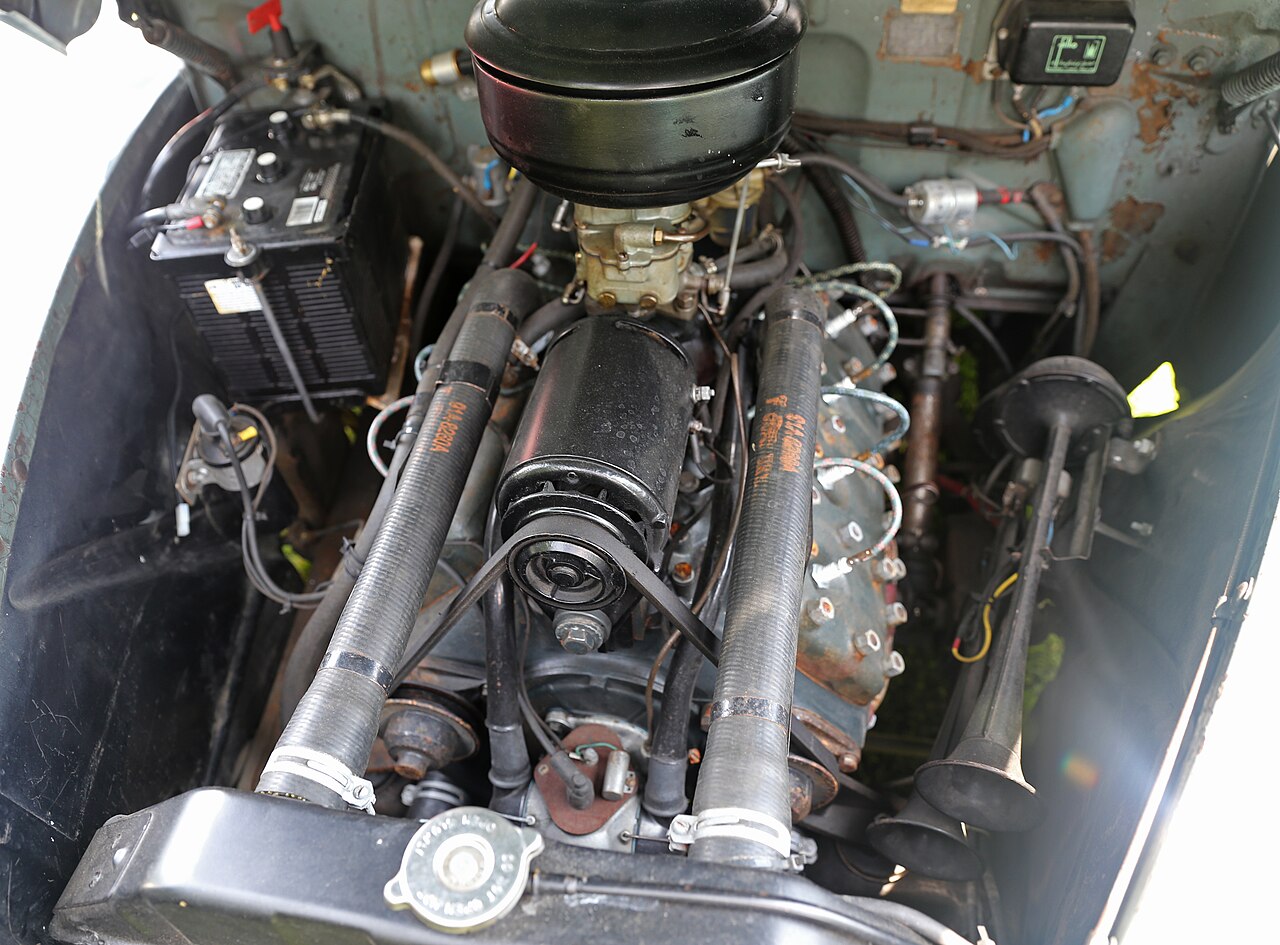
A 1941 Ford V8-11A flathead in a Super DeLuxe. The uploader notes the tubes may come from a 1939 91A engine. This is a stock engine, the starting point for the speed-equipment era. Photo: Mr.choppers, 2015-07-12. Source: Wikimedia Commons. License: CC BY-SA 3.0.

Early customizing was called restyling, and the goal was a fake Cord. Then the look was named for the lead
From fake Cords to lead sleds
Early customizing (c.1935–1946) was called “restyling,” and the goal was a “fake Cord,” not a hot Ford. Grilles, bumpers and trim were swapped from more expensive makes, and insignias were removed.1 The vocabulary grew with the work: chopped tops, DuVall windshields, padded Carson tops, solid or leaded-in rear fenders, fadeaway fenders.1 The know-how traveled on paper, in Dan Post’s Blue Book of Custom Re-Styling and a pamphlet from Pennsylvania’s Ed Almquist.2 The GMC blower was in the engine work by 1948.4 The next era was named for the lead.
From about 1949 to 1955 the look was lowering, de-chroming, deep metallic paint, reshaped fenders, top chops and sectioning, with seams and holes finished in tin and lead (hence “lead sleds”).2 The chopped ’49–’51 Mercury became the defining canvas after Sam Barris’s ’49.2
Then channeling. Summers is credited with the first channel job by Motor Life, 1955.◐1 Whether Summers was first to channel a body is still open.
Not every builder reached for the same material. Roy Hagy “didn’t like to use much lead; he’d metal-finish everything” (Tom Sparks via Pat Ganahl).5 See Roy Hagy.
Under the hood
The engine side had its own words. “Semi,” “three-quarter,” and “full race” cam grades come from Winfield’s master cams (Ed Winfield).3 Add multi-carb intakes (Thickstun, Weiand, Edelbrock Slingshot, Navarro) and milled or aluminum heads.4
Decades later the street got a style of its own, Pro Street, from 1979 to the late 1980s.
It was called “restyling,” and the goal was a “fake Cord,” not a hot Ford. The next era was named for the lead.
See also: Customs on Paper and in Plastic.
Open questions & disputed details
1 item
From the detective’s notebook: where the sources disagree, where we have only one, and what we are still looking for. Each item links back to its place in the story.
Single source so far. Was Summers first to channel a body? Only Motor Life (May 1955) says so, as Kustomrama reports it; we have not seen the magazine or any earlier claim.1 See Jimmy Summers. ↩
Images
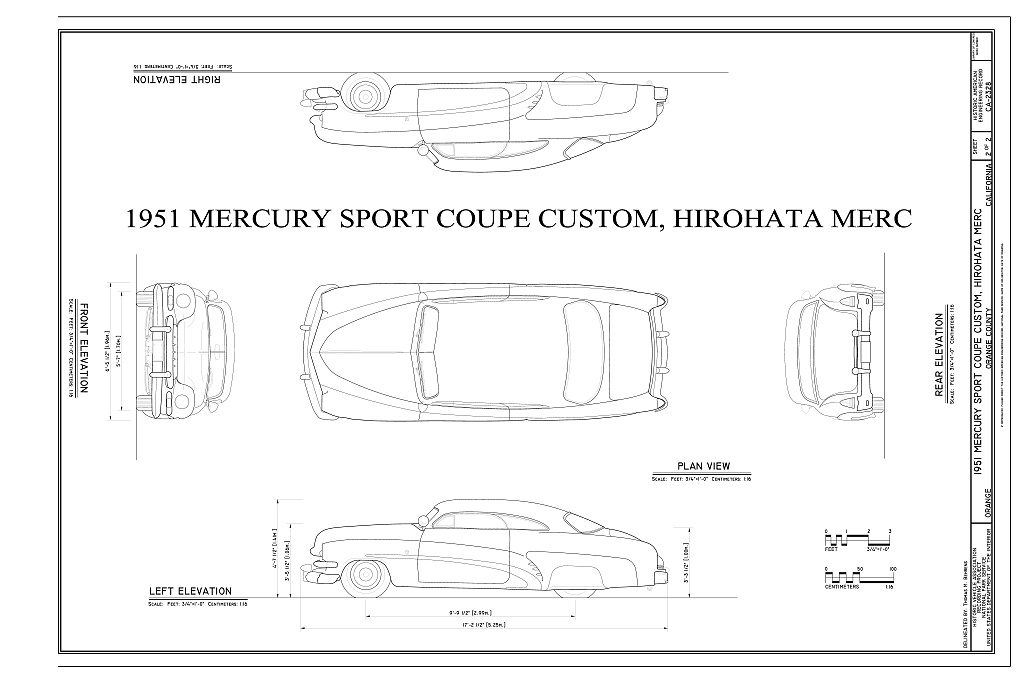
HAER CA-2328, sheet 2: measured elevations of the Hirohata Merc, a reference for the chopped, lowered early-’50s custom profile (see Hirohata Mercury). Creator: Historic American Engineering Record (NPS), delineated by Thomas M. Behrens; with the Historic Vehicle Association. Date: 2017. Source: Library of Congress. License: No known restrictions (U.S. Government work, HAER/NPS).
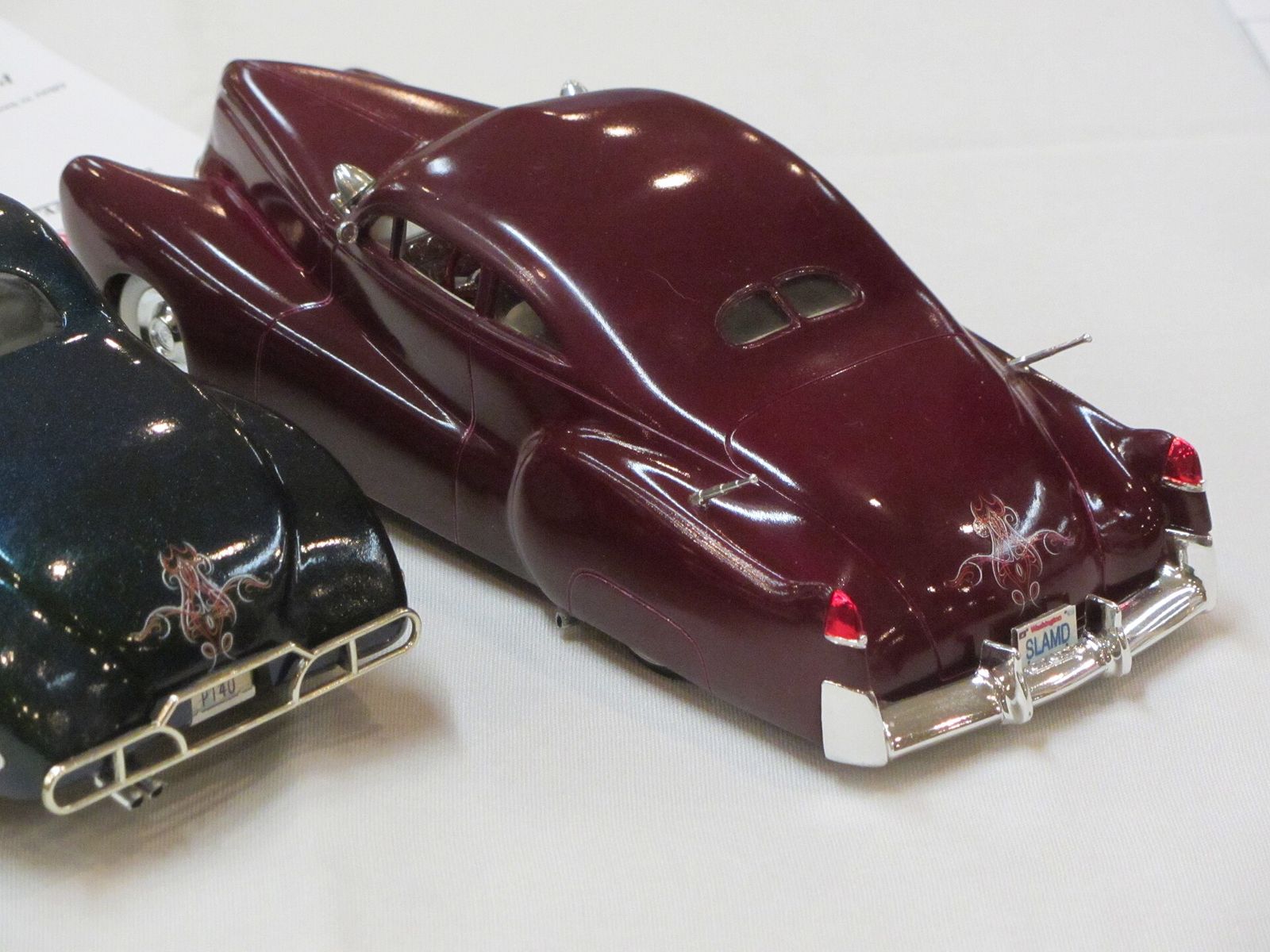
A scale model of a 1940 Mercury custom showing the smoothed fat-fender look. It is a model, not a full-size car. Creator: JOHN LLOYD from Concrete, Washington, United States. Date: 2016-02-28 10:32. Source: Wikimedia Commons. License: CC BY 2.0.

Sources & notes
5 notes
-
Kustomrama, “Jimmy Summers.” https://kustomrama.com/wiki/Jimmy_Summers (accessed 2026-10-12) ↩↩↩↩
-
Ken Gross, “Emerald Icon from a Lost Era,” Revs Institute. https://automedia.revsinstitute.org/emerald-icon-from-a-lost-era-the-saga-of-the-hirohata-mercury (accessed 2026-10-12) ↩↩↩
-
Hemmings, “Ed Winfield: The Master of Hot-Rodding and Performance.” https://www.hemmings.com/stories/ed-winfield-2/ (accessed 2026-10-12) ↩
-
Tony Thacker, “Barney Navarro,” AHRF. https://ahrf.com/pioneer/barney-navarro/ (accessed 2026-10-12) ↩↩
-
Kustomrama, “Roy Hagy.” https://kustomrama.com/wiki/Roy_Hagy (accessed 2026-10-13) ↩