Companies & Shops 1930s California
Before Everyone Got into the Act
Before everyone got into the act there were George Wight's Bell Auto Parts, Lee Chapel, Karl and Veda Orr, and Jim White: the first speed shops.
Confidence LowHow we know this
- Confidence
- Low
- Source types
- secondary, oral
- Last verified
- 2026-10-12 (Round 1)
- Open issues
- Wight/Wright spelling open
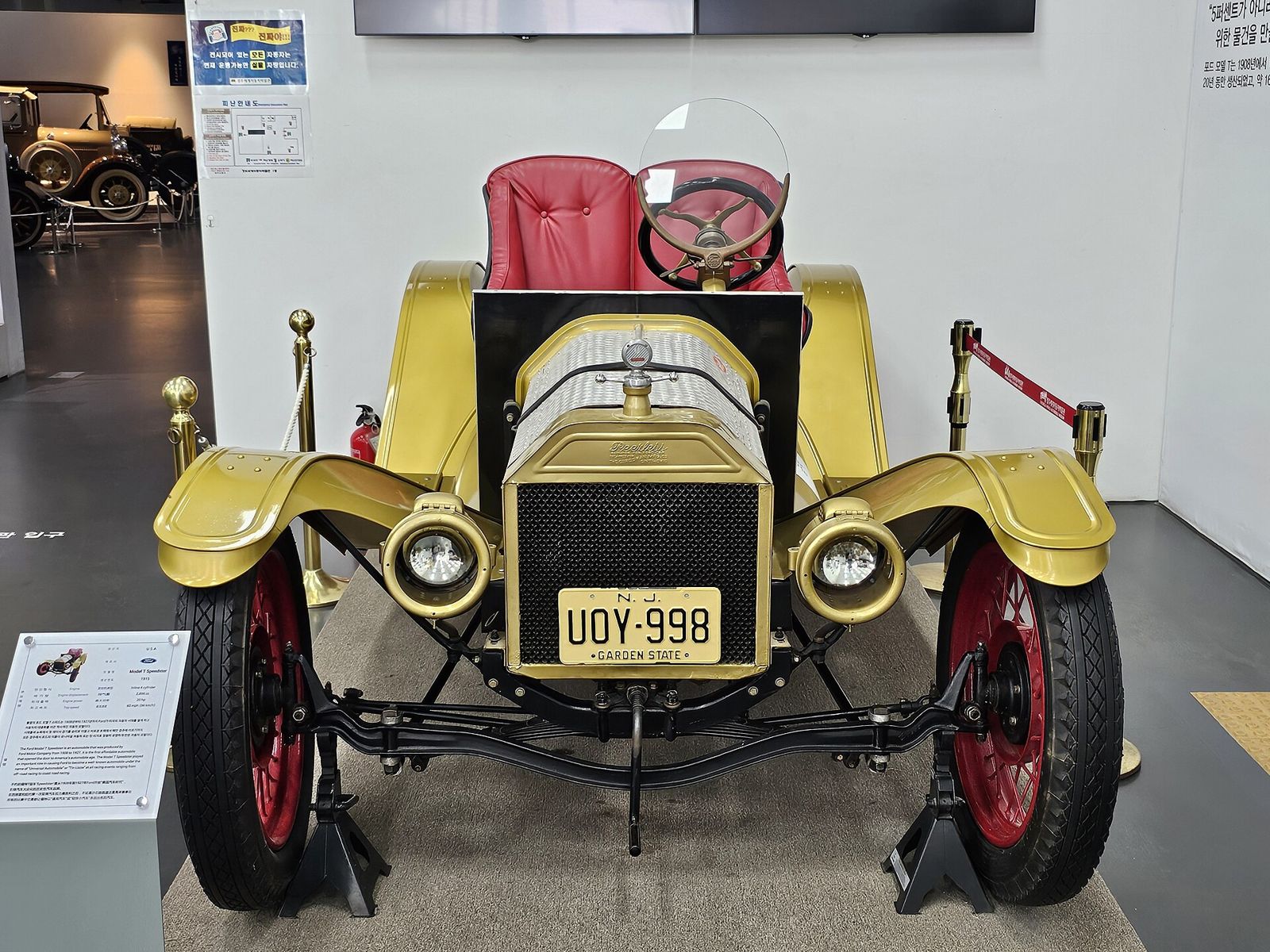
A 1915 Ford Model T Speedster at the Gyeongju World Automobile Museum. It shows the stripped Model T type whose speed parts fed Bell Auto Parts' early trade. It is not linked to any shop named here. Creator: Damian B Oh. Date: 2025-08-31 09:53:23. Source: Wikimedia Commons. License: CC BY-SA 4.0.

George Wight’s junkyard in Bell, then Lee Chapel, Karl Orr, and Jim White, before everyone got into the act
Dean Batchelor wrote in The American Hot Rod: “First there was George Wight, then Lee Chapel, then Karl Orr, and then everyone got into the act.”1 Hemmings’ Daniel Strohl adds a fourth name Batchelor left out. The name is Jim White. Before everyone got into the act, these were the shops.
George Wight and the junkyard (Bell Auto Parts, 1923)
The first came out of a junkyard. George Wight started a junkyard in Bell, California in 1923, noticed many incoming Model Ts carried speed equipment, and resold it cleaned up. The building at 3633 Gage Ave. came in 1928.1 (The Jalopy Journal spells his name “Wright”;2 Batchelor and Hemmings use Wight. The spelling is still open.)
The junkyard became a parts lab. Per the Jalopy Journal, hot rodders brought back reports on parts they ran, and Wight kept notes on what worked. When Cragar (Harlan Fengler and Crane Gartz’s company, which had taken over the Miller-Schofield/Goossen “Valve-in-Head” Model A head) failed in 1932, Wight bought the heads, patterns and tooling after six months of negotiation. He got the price under $100 by 1933 and introduced an “Improved Cragar Head” in 1935.2◐ The price, and that head, are one account so far.
Lee Chapel, c. 1929
Lee Chapel came next. A c.1950 catalog posted on the H.A.M.B. claims 21 years in business for Lee’s Speed Shop, which implies 1929.◐ The year is an inference from that catalog. Lee’s was at 3263 San Fernando Rd., LA (sharing a junkyard), moved in 1933 to 4557 Alhambra Ave., closed in 1937 while Chapel toured with a midget, and reopened in 1939 at 1143 E. 14th St., Oakland.1
Jim White, 1932
Batchelor’s list leaves one out, and Hemmings adds him. Based on Roger Harrell’s book, Jim White’s Speed Shop opened in 1932 near San Pedro & 99th in South Central LA, moved mid-1933 to 11006 S. Main, then in 1940 to 10924 S. Main.1
Karl and Veda Orr, 1940
Then came the Orrs. The Orr Speed Shop opened in 1940 at 11140 Washington Place, Culver City.1 The Bell shop outlived Wight. He died in 1943. His widow ran the shop until Roy Richter bought it in 1945. Richter built it into an early mail-order speed shop.12 Veda Orr also photographed for California Timing News (Feb 1947 photos of the Summers Merc).3 The Orr shop closed sometime in the 1950s and reopened in the 1960s on Sierra Highway in Mint Canyon.1 See Veda Orr.
Jim White ran the shop at 10924 S. Main with his brother Nick Harrell until 1976.1◐ The run until 1976 is one account so far. Richter sold Bell Auto Parts to Chuck Strader in 1978; Strader ran it in Huntington Beach until 1987.12
First there was the junkyard in Bell. Then Lee Chapel, then Karl Orr, and Jim White, the name Batchelor left out. Then everyone got into the act.
See also: George Riley and the Heads That Cracked.
Open questions & disputed details
3 items
From the detective’s notebook: where the sources disagree, where we have only one, and what we are still looking for. Each item links back to its place in the story.
Single source so far. Under $100 by 1933? Wight’s price cut and the 1935 “Improved Cragar Head” come only from the Jalopy Journal history.2 Lead: Bell Auto Parts catalogs and ads, 1933–35. ↩
Single source so far. Lee’s Speed Shop in 1929? The year is our inference from a c.1950 catalog posted on the H.A.M.B. that claims 21 years in business.1 ↩
Single source so far. Run until 1976? That Jim White’s shop at 10924 S. Main ran with his brother Nick Harrell until 1976 comes only from Hemmings, drawing on Roger Harrell’s book.1 ↩
Images
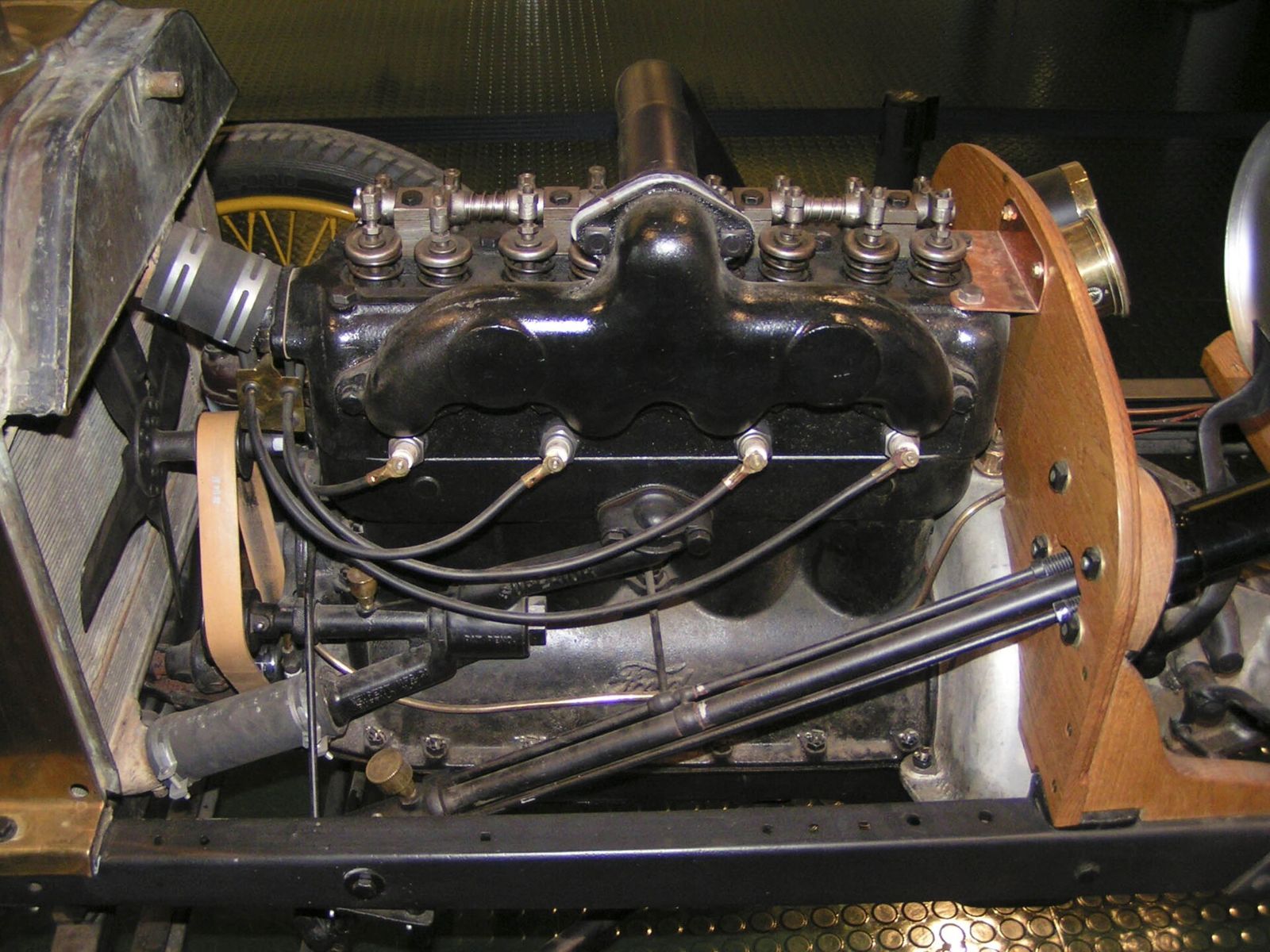
A Model T racing engine with an overhead-valve conversion. The uploader notes it “has overhead valves, whereas the standard T engine had side-mounted valves.” The maker of the head is not identified. Creator: dave_7 from Lethbridge, Canada. Date: 2008-05-20 14:47. Source: Wikimedia Commons. License: CC BY-SA 2.0.

Sources & notes
3 notes
-
Daniel Strohl, “Lost Speed Shops: Bell, Chapel, Orr,” Hemmings, Nov 23, 2009. https://www.hemmings.com/stories/lost-speed-shops-bell-chapel-orr/ (accessed 2026-10-12) ↩↩↩↩↩↩↩↩↩↩↩
-
Ryan, “The History Of Bell Auto,” The Jalopy Journal, May 12, 2010. https://www.jalopyjournal.com/?p=8704 (accessed 2026-10-12) ↩↩↩↩↩
-
Kustomrama, “Jimmy Summers.” https://kustomrama.com/wiki/Jimmy_Summers (accessed 2026-10-12) ↩