Companies & Shops 1960s Fraser, Michigan
Logghe Stamping: Fraser’s Flip-Top Chassis Shop
Gene Logghe was burned at 187 mph at Ubly Dragway in 1962, and his father forbade the brothers to drive. They kept building, and the Fraser shop made the flip-top Funny Cars of 1966.
Confidence MediumHow we know this
- Confidence
- Medium
- Source types
- MMSHOF bio, Garlits Museum HOF, enthusiast press
- Last verified
- 2026-10-14 (Round 9)
- Open issues
- Company founding year 1946 vs 1947
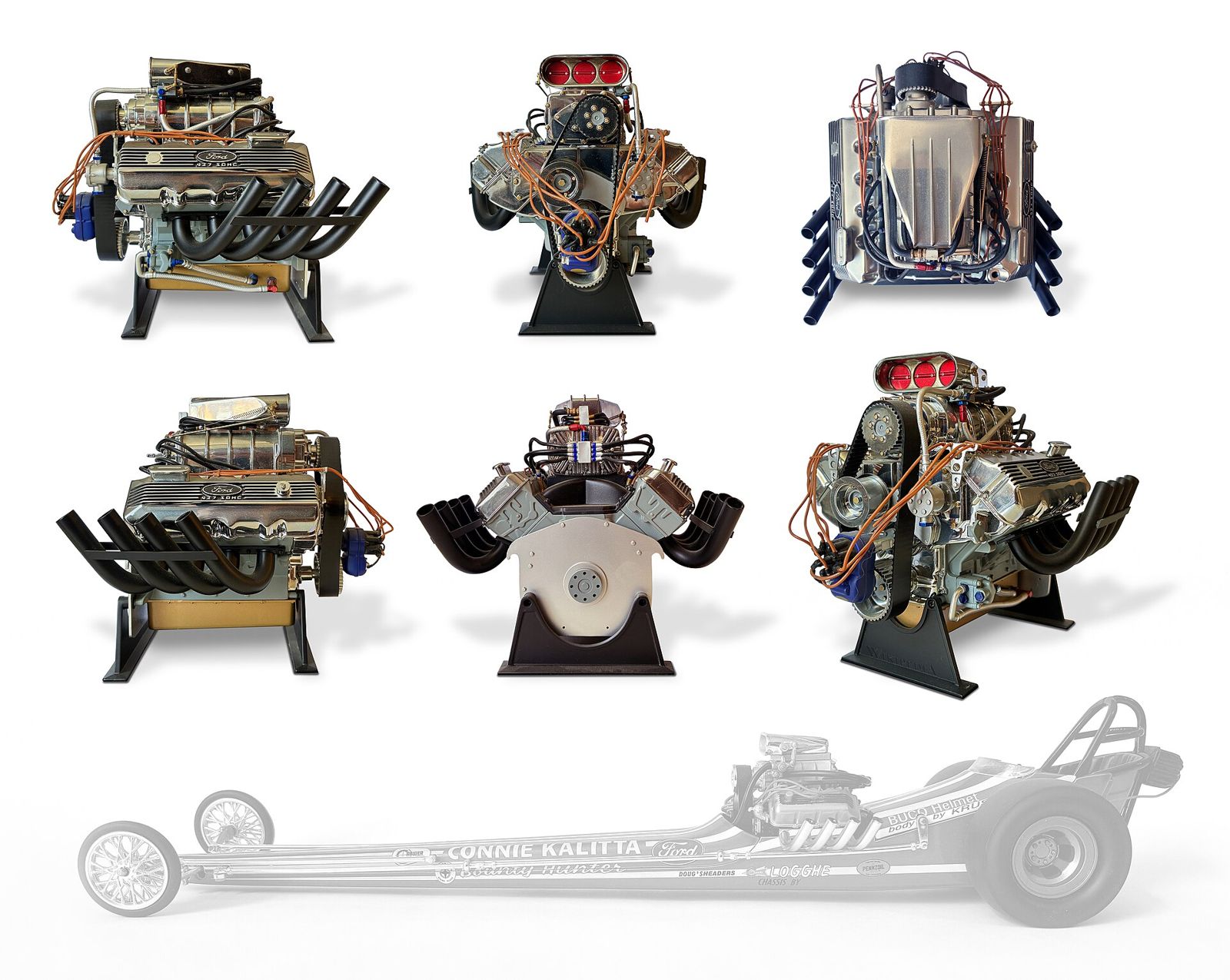
A modern Top Fuel display engine based on the Ford 427 SOHC. The first Logghe flip-top Comets ran injected (then blown) SOHC 427s—this is a later blown example, not a 1966 race engine. Creator: Auge=mit. Date: 2025-06-22. Source: Wikimedia Commons. License: CC BY-SA 4.0.

Gene was burned at Ubly, their father forbade them to drive, and the Fraser shop built the flip-top Funny Cars
In their own words
“I said, ‘What the hell is this?’ It was a dragster with a body on it and the driver in the back seat...”
— Eddie Schartman on his first Logghe flip-top Comet, Dec 1965 (NHRA.com, 2016). Context
Gene Logghe was burned in the brothers’ own dragster at Ubly Dragway on a 187 mph run in 1962.1 Their father then forbade them to drive diggers.2 They kept building them. The Logghe Stamping Company of Fraser, Michigan, turned a Big Three bracketry shop into the chassis house that defined early Funny Cars.
It began as their father’s business. Morris Logghe, a Belgian immigrant, founded Logghe Stamping as an automotive bracketry company serving Detroit’s Big Three.⚠ The founding year is 1946 vs 1947.
In 1955 Ron and Gene began working for their father, Gene about 17, Ron about 15.1 They first tried sports-car racing. Then they attended the drag races at the long-defunct strip in New Baltimore, Mich., in 1958, where they met local racer Connie Kalitta.12 That meeting led to their first chassis. In 1961 Kalitta asked them to build a dragster chassis, their first customer chassis. Success brought more orders. They added clutch cans, steering parts, and axles.2
Soon they had cars of their own on the strip. A partnership with employees Jim Marsh and Roy Steffey produced the injected Chevy digger nicknamed “the Giant Killer.” MMSHOF says that in 1964 it became the first non-supercharged car into the sevens.◐1 In 1965 Maynard Rupp drove their blown Chrysler “the Prussian” (tuned by Steffey) to what the Garlits Museum calls the first NHRA points championship for that team.◐2
The 1966 flip-top Comets
Then the factory called. Lincoln-Mercury’s Al Turner (with Fran Hernandez in the factory program) asked for cars that could beat Chrysler’s altered-wheelbase match racers. The Logghes delivered a chromoly tube chassis, ladder-bar rear, four-corner coil-overs, and a one-piece flip-top fiberglass body, first for Nicholson and Schartman on normally aspirated 427 SOHC engines, then a blown SOHC car for Chrisman.123 In 1966 brothers Ron and Gene Logghe built the first series of tube-frame, coil-over, one-piece flip-top cars for Lincoln-Mercury. Customers included Eddie Schartman, Dyno Don Nicholson, Jack Chrisman, Connie Kalitta, Gene Snow, Al Bergler, and many others.12 Ron Logghe told MMSHOF they “literally introduced the coil-over design to the racing industry.”◐ Al Bergler did the aluminum tinwork on Logghe cars.1 Schartman won NHRA’s first Funny Car eliminator at the 1966 World Finals in Tulsa in a Logghe Comet.4
Demand outran the shop. Wikipedia (citing secondary histories) notes other builders (Don Hardy, Ronnie Scrima, Dick Fletcher) joined the chassis trade as Logghe could not fill every order.◐
The race-car side became a business of its own. They formed a Competition Products division for race cars and parts. The Garlits Museum says the shop later turned out over 600 race cars (Funny Cars, diggers, Pro Stocks, Altereds, Bonneville cars, even go-karts).◐2 Car Craft named Logghe Funny Car Chassis Builder of the Year 1967–70.◐2
Racing chassis work at Logghe Stamping was discontinued in 1975.1 The stamping company itself closed in 2013.2 They were NHRA Hot Rod Reunion honorees in 2006. The MMSHOF inducted them in 2010. The Garlits Museum / IDRHOF class was 2021.12 Ron Logghe died May 27, 2020; Gene died August 2021 (MMSHOF).1⚠
Their father forbade them to drive diggers. They kept building, and the Fraser shop built the flip-top Funny Cars.
See also: Eddie Schartman, Fran Hernandez, Al Bergler, Detroit Dragway & Cordova, Malcolm Durham (later Logghe Camaro), Gene Snow (Logghe-chassis Charger Rambunctious, 118-in. wheelbase, per Hot Rod June 1969).
Open questions & disputed details
8 items
From the detective’s notebook: where the sources disagree, where we have only one, and what we are still looking for. Each item links back to its place in the story.
Disputed. 1946 or 1947? The Michigan Motor Sports Hall of Fame says 1947 in Fraser; Hot Rod’s family feature says 1946, starting in a home garage before moving to a Fraser plant.13 ↩
Single source so far. The first non-supercharged car into the sevens? Only the Michigan Motor Sports Hall of Fame credits the Marsh–Steffey “Giant Killer” with that in 1964.1 Lead: 1964 Drag News records lists. ↩
Single source so far. A points championship in 1965? Only the Garlits Museum biography says Maynard Rupp drove “the Prussian” to the team’s first NHRA points championship.2 Lead: NHRA’s 1965 division standings. ↩
Single source so far. Over 600 race cars? The figure is the Garlits Museum biography’s; we have not seen a build list or another count.2 ↩
Single source so far. Chassis Builder of the Year, 1967–70? The Car Craft awards come to us through the Garlits Museum biography; we have not seen the magazine.2 Lead: Car Craft award issues, 1967–70. ↩
Single source so far. Did Logghe introduce the coil-over? Only Ron Logghe says so, to the Hall of Fame; treat it as self-attribution.1 ↩
Single source so far. Did others fill Logghe’s overflow? Wikipedia, citing secondary histories, says Hardy, Scrima and Fletcher joined the trade because Logghe could not fill every order.5 Lead: period chassis ads. ↩
Disputed. Is Gene Logghe still living? The Garlits Museum biography said he “resides in Michigan” when it was written; the Michigan Motor Sports Hall of Fame later gives his death as August 2021, and that is the stronger record.12 ↩
Images
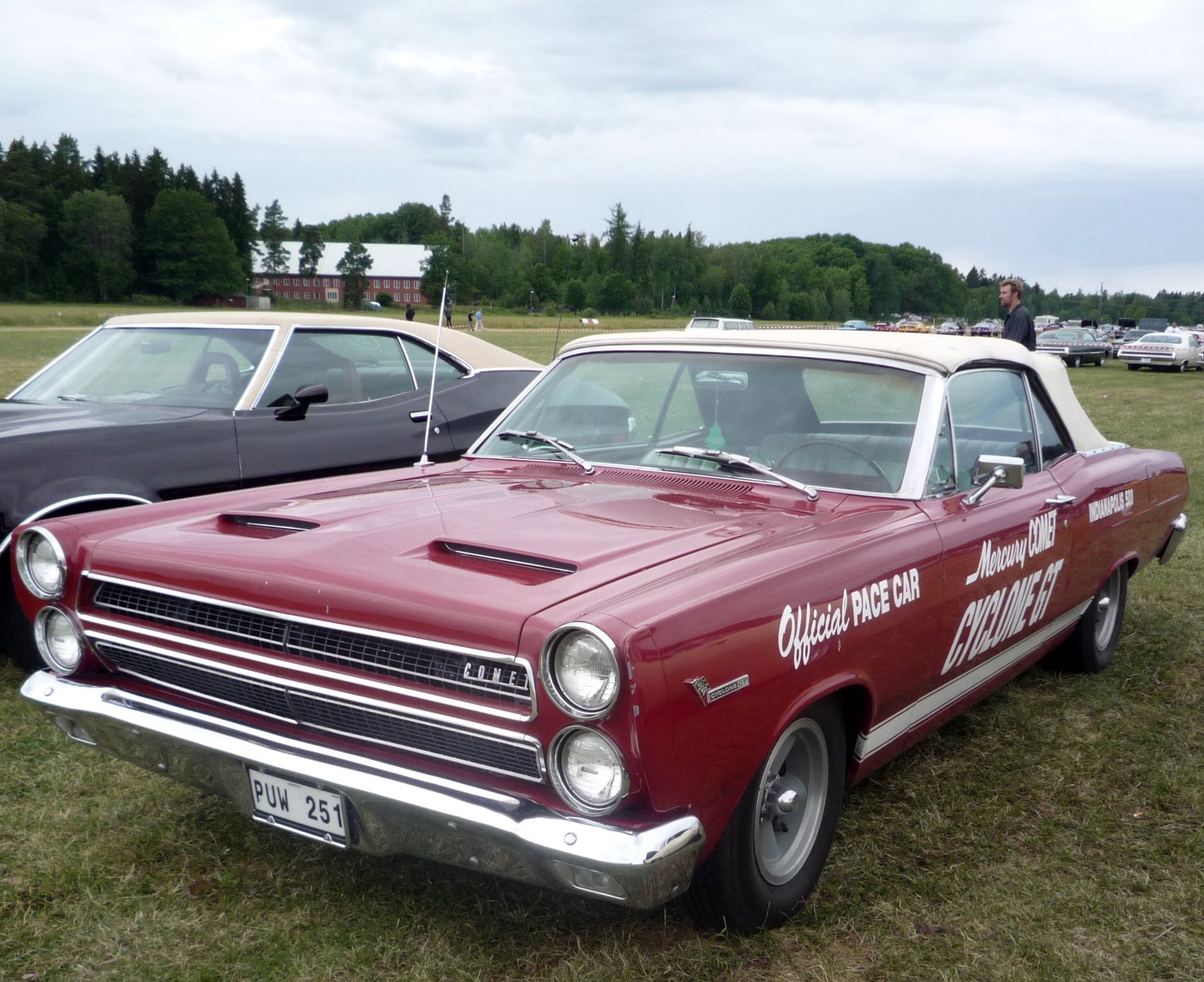
A stock 1966 Mercury Comet Indy 500 pace car. Logghe’s first flip-tops used fiberglass Comet-style bodies for Lincoln-Mercury—not this production car. Creator: MGSpiller. Source: Wikimedia Commons. License: CC BY-SA 2.0.

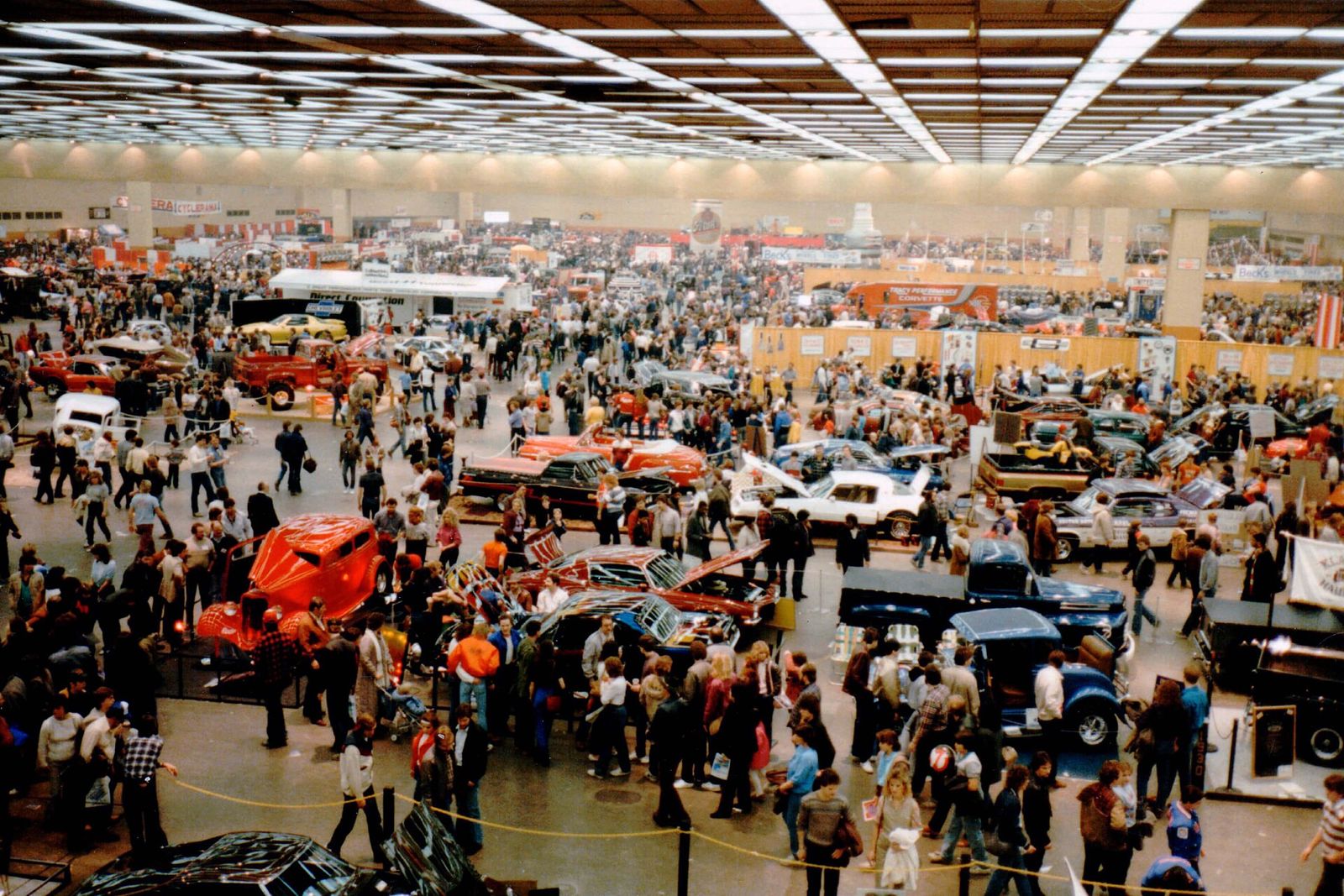
The 1985 Detroit Autorama. Michigan Hot Rod Association’s show was the off-season place where Detroit builders and Logghe customers often debuted cars (see Al Bergler). Creator: Joetregembo. Date: 2023-02-03. Source: Wikimedia Commons. License: CC BY-SA 4.0.

Visual references (external)
These are copyrighted or rights-restricted images, so we link to them instead of copying them.
- Hot Rod, “How the Logghe Family Changed the Face of the Funny Car Class”
- MMSHOF Logghe Brothers inductee page
Sources & notes
5 notes
-
Michigan Motor Sports Hall of Fame, “Logghe Brothers” (2010). https://www.mmshof.org/index.php/inductees/inductees/251-logghe-brothers (accessed 2026-10-13) ↩↩↩↩↩↩↩↩↩↩↩↩↩↩
-
Don Garlits Museum of Drag Racing, “Ron & Gene Logghe” (Hall of Fame). https://garlits.com/hall-of-fame/ron-gene-logghe/ (accessed 2026-10-13) ↩↩↩↩↩↩↩↩↩↩↩↩↩↩
-
Hot Rod, “How the Logghe Family Changed the Face of the Funny Car Class in Drag Racing.” https://www.hotrod.com/features/logghe-family-changed-face-funny-car-class-drag-racing (accessed 2026-10-12) ↩↩
-
Phil Burgess, “‘Fast Eddie’ Schartman,” NHRA.com, Feb 12, 2016. https://www.nhra.com/news/2016/fast-eddie-schartman (accessed 2026-10-13) ↩
-
Wikipedia, “Logghe Stamping Company” (secondary synthesis; verify before relying on detail). https://en.wikipedia.org/wiki/Logghe_Stamping_Company (accessed 2026-10-12) ↩